Status contract fails
The endpoint returns a code outside the configured expectation.
Rejected
Request, contract, sequence
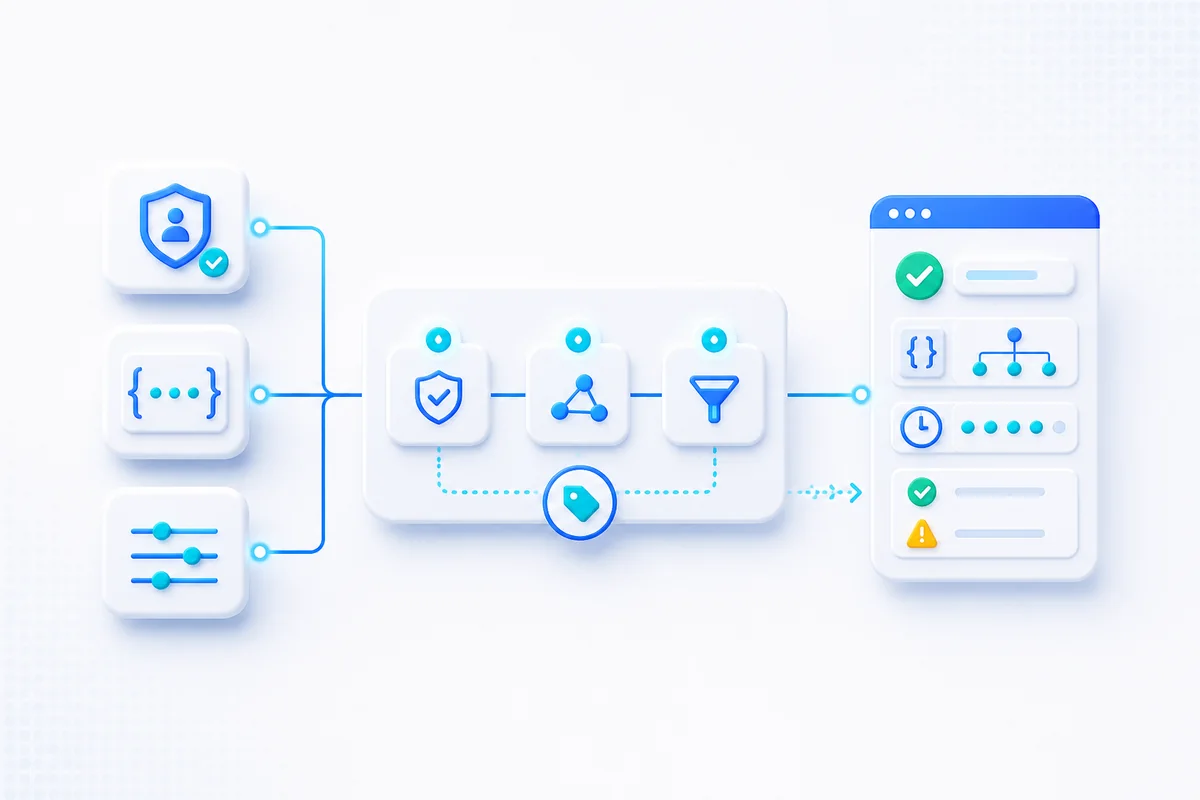
PageLantern sends the real method, headers, body, and authentication, then checks status, latency, JSON expectations, schema, and ordered request flows before a bad response reaches customers.
The endpoint returns a code outside the configured expectation.
RejectedA required response field is missing or contains the wrong value.
Invalid bodyA failing step ends the sequence before later requests can run.
StoppedRequests and response contracts
Single-request checks cover endpoint contracts. Multi-step checks share a session, capture values, and pass them into later URLs, headers, or bodies.
Request control
Contract and flow
Plan and location model: Single-request API checks and JSONPath assertions are on Free. Schema validation, multi-step flows, variable extraction, HAR export, and OpenAPI/Postman import start on Starter. Multi-step sequences run hub-local; single-request checks can use optional second-region failure confirmation.
Example result
Illustrative values show where an ordered API flow stopped and which assertion caused it.
Next step
FAQ
Yes. API monitors send the method, headers, request body, and authentication profile that real clients use, so you exercise the same request shape your customers or internal services depend on.
Beyond reachability, you can assert on status codes, response latency, body text, and specific JSON fields, so contract drift or missing data is visible even when the endpoint returns 200.
API monitors support GET, POST, PUT, PATCH, DELETE, and HEAD, with custom headers and request bodies, so the check can match the endpoint’s real behavior instead of reducing it to a basic ping.